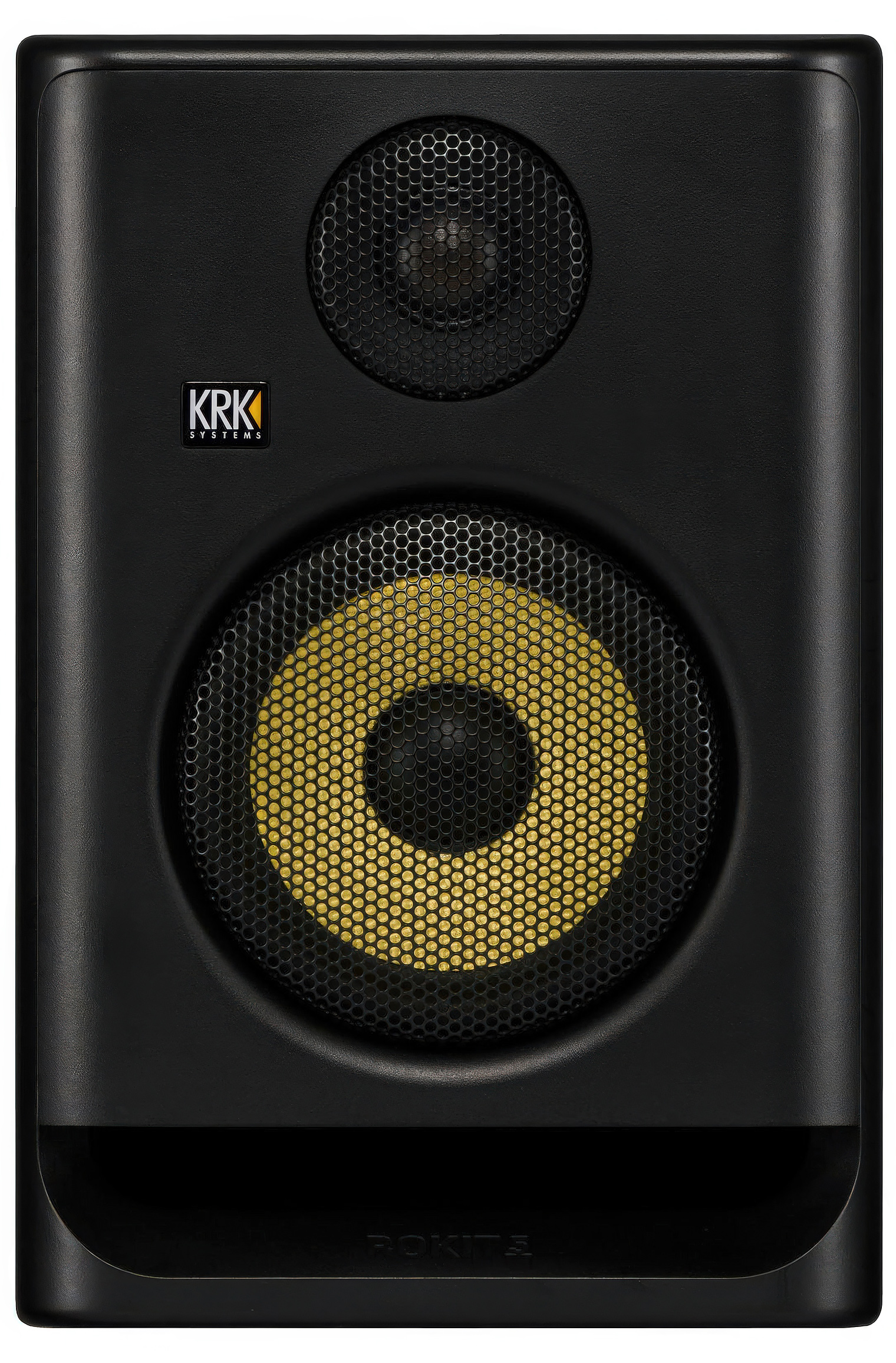
The KRK Rokit 5 Generation 5 monitor, released in March 2024, resembles its predecessor model. However, it introduces notable features such as preset EQ voicings and a new 1-inch silk dome tweeter. Over the past month, I’ve mixed classical guitar and ensemble music with the KRK Rokit 5 Generation 5 on my Mac Studio and Tascam Series 208. Here are my thoughts on using the Rokit 5.
KRK Rokit 5 Generation 5 | In person, the cabinets are dark charcoal gray, while the grills and woofer surrounds are true black. | Image courtesy KRK
Why KRK?
Due to space restrictions—back bedroom studio—a five-inch woofer monitor was the largest size that could fit on my desk. I visited my local Guitar Center, planning to buy the Adams TV5 or a PreSonus Eris Studio 5. However, a herd of KRK Rokit monitors caught my eye, alongside Adams, Focal, PreSonus, JBL, Kali, Yamaha, Neumann, and others. I synced up Bluetooth and listened to most of the five- or six-inch models. Not ideal conditions, but I got a rough idea of the differences in sound between them.
Classical guitar sounded good on most of them except the Yamaha, which was excessively bright and thin. I liked the Kali and Adams, but they were too big for my desk. I spun the KRK Rokits around and put them in Mix Mode (flat EQ), and classical guitar sounded great on them. A friend owns an older Rokit 5, and they were a bit boomy. In contrast, this new model sounds even-knelled, was small enough for my desktop, and the price was right (on sale for $358 a pair). I walked out with a pair of KRK Rokit 5 Generation 5 studio monitors.
Defining Features
DSP-enhanced monitors are gradually wiggling into the industry with examples from budget models to the high end, e.g., M-Audio Forty Sixty, Adam Audio D3V, and Neumann KH 120 II. The Rokit 5 Generation 5, like the Generation 4, uses Digital Signal Processing (DSP) to convert analog audio output from an audio interface to digital format. It subsequently modifies the digital signal using DSP and converts it back to analog for speaker output.
Rear LED Panel | Create Mode voicing (V-shaped EQ) preset dialed in.
From the Generation 4 model, the Rokit 5 Generation 5 inherited 25 boundary and EQ combinations to optimize sound for room acoustics. For example, if bass is bloated due to close proximity to a wall, it may be rolled off a few dB, or a high-pass filter may be engaged at a specific frequency. DSP settings continue to be displayed on a monochrome LED screen on the backside, but the screen is now orange instead of blue. The function wheel, used to input settings, was also carried over from the Generation 4.
Voicing Presets
New for the Rokit 5 Generation 5 are three preset DSP voicings: Mix Mode (flat frequency response), Create Mode (V-shaped teenager EQ), and Focus Mode (mid-forward EQ). These voicings are claimed to provide the functionality of having three speakers in one. You can also dial in custom EQ profiles manually.
I only use Mix Mode, but some may wish to use Create Mode to ensure mixes sound good on consumer gear with a similar profile, e.g., car stereos and boomboxes. Most people listen to music on headphones, so my most important mix check tools are Apple AirPods and a pair of Sennheiser HD650.
Mix Mode | Flat frequency profile, with slight bumps at 100 Hz and 15 kHz.
DSP Access
If your monitors have walking space behind them, the rear-mount DSP controls are convenient. However, if your monitors are on a desk near a wall, it's a PITA to input settings. Diddling the function wheel is easy but my neck ached after scrolling through the DSP settings on the LED screen for 10 minutes.
No USB
KRK missed an opportunity by omitting a USB-C port, which could have allowed direct digital input and additional DSP control from a computer app. Imagine how much more effective it would be to sit in your normal listening position and make A/B EQ adjustments. After all, DAC and ADC chips are part of the DSP hardware that is built-in into the Rokit 5.
KRK Audio Tools
If you don't trust your ears or wish to fine-tune your settings, the free KRK Audio Tools app for smartphones may be used for guidance: align monitors, monitor level calibration, frequency spectrum display, adjust EQ for the room, check polarity, etc. The app relies on the phone mic for measurements, so you may wish to plug in a better quality mic for EQ and balance adjustments.
KRK Audio Tools | Continuous Sine Sweep display.
My monitors reside on Vondynote steel pedestal monitor stands and are surrounded with sound treatment panels, so default DSP settings sound good. Nevertheless, I aligned the monitors using the app: laid my iPhone on the monitor and rotated the speaker stand until the screen indicated a 30-degree angle. Would I ever use KRK Audio Tools again? Probably not.
Sound Characteristics
In Mix Mode (flat EQ), the Rokit 5 sounds neutral and balanced, with no bass bloat, sweet mids, and detailed but not stringent upper frequencies. As a point of comparison, the Rokit 5 has considerably less bass and is brighter than Sennheiser HD650 headphones. It is nearer in character to my Beyerdynamic 270 Pro X headphones, albeit the Rokit 5 sounds slightly sweeter in the midrange and has a wee bit more bass. I often edit on Beyerdynamic 270 Pro X headphones, and the mixes translate well—sound better—on the KRK Rokit 5 in Mix Mode.
The sound stage is clearly defined: I hear instrument placement with pinpoint accuracy when I sit in the sweet spot (where your head forms a triangle with the speakers). Indeed, the sweet spot is much larger than my old BX5 D2 monitors, and the phantom center channel is vivid. Compared to the Beyerdynamic 270 Pro X headphones, the sound stage is more defined and spacious.
I mainly mix classical and acoustic guitar solo and ensemble recordings, live and multi-track, so the bass range is fine for me. The bass extends down to a solid 54Hz. I can hear lower frequencies, but they fade fast below 50Hz—but there is plenty of range for drop-D or C tuning on guitar. If you mix upright bass and kick drum, you'll want larger speakers or a sub, but the Rokit 5 is great for my solo guitar and ukulele tracks.
RFI and Noise
I'm an inner-city dweller and live in a high RFI area. A major selling point for me was KRK's claim of RFI shielding. And that was no mere marketing jive. The Rokit 5 is well shielded against RFI. No AM radio disc jockeys, smartphone chirps, or static in my tracks. I can't make that claim for all speakers I've owned.
Noise
In my normal sitting position, I was unable to hear hum or static during playback of soft and silent passages. I also moved my ear next to the tweeter and was still unable to hear hiss or static.
Construction
The Rokit 5 is attractive—one of the most handsome among the monitor herd at Guitar Center. Its somewhat understated industrial stylings include a textured matte charcoal gray vinyl finish—almost black—front-facing mouth-shaped bass port, rounded corners, and an iconic yellow woofer. These compact monitors (288 mm x 191 mm x 242 mm) are slightly larger than the M-Audio BX5 D2 but noticeably smaller than the Adam TV5.
Construction feels solid with dense particle board (MDF) cabinets, metal back plate (heat sink), and a molded plastic bass port. Fit and finish are excellent.
The 5-inch woofer is less saturated yellow than prior Rokits but still made of woven Kevlar with rubber surrounds. Rubber surrounds are more durable than foam surrounds. I have a graveyard of monitors with blown foam surrounds.
Silk Dome Tweeter
The inclusion of a 1-inch silk dome tweeter is a first for the Rokit line. KRK claims the new tweeter enhances high-frequency detail over the prior tweeter. If the stated frequency response of 54 Hz – 30 kHz (+/- 3 dB) is true, only dogs, rodents, and bats will reap the sonic benefits! Humans can't hear past about 20 kHz, and most are lucky to sense 15 kHz. With that said, the tweeter sounds detailed and smooth in Mix Mode. Our family canine was not irritated during mixing sessions.
Blinded by the Logo
The company logo is illuminated and unnecessarily bright at defaults. A single tiny blue or red LED dot to indicate power and standby is preferable. Luckily, the logo light may be disabled or dimmed via the rear controls.
Two-Faced Monitors
Two molded face plates are included: one with a protective grill for the drivers and another sans grill for the nude studio transducer look. The face plates are held by magnets and may be swapped with a firm tug on the corners.
Ready | Neumann TKM 102, Mac Studio and Rokit 5 lurking in the back.
Amplifiers
The Rokit 5 is bi-amped, i.e., powered with separate Class-D internal amplifiers for the tweeter and woofer: a 35 Watt amp for the woofer and 20 watt amp for the tweeter. The crossover frequency is 27 kHz. Bi-amping allows more accurate reproduction as the amplifiers are optimized for each driver.
Volume
The the 55-watt rating struck me as underpowered since my old BX5 is rated at 70 watts. However, once jacked into my Tascam 208i interface, the true power was revealed. With each monitor set to the default 0 dB gain on the LED, it was loud—about the same as the BX5—and could be painfully loud if cranked past the 1:00 position on my Tascam 208i volume knob. With that said, these monitors are ideal for a small studio space or bedroom, but probably lack the volume for a large living room or studio.
Power
Each monitor has a sturdy on/off switch and requires an audio input cable (not included) and a standard AC power cable (included). A 1TA fuse box is integrated into the AC power port.
By default, a low-power sleep mode (standby) engages when the monitors are inactive for over 30 minutes. An audio signal wakes them automatically. One night I donned headphones to check a mix; auto wake kicked in, and a blast from the monitors woke up my wife! Standby mode can be disabled in the SETUP menu, but I prefer to keep the monitors plugged into a switched power tap, powering them up with a single switch when needed.
Heat
My BX5 D2 monitors ran hot: the back plate became uncomfortable to touch after a session. The Rokit 5 has better heat management and merely gets warm. I live in the tropics, so the Rokit 5 should run even cooler in temperate and cold climates.
Connectivity
KRK Rokit 5 connections are few: a single XLR/TRS combo input. That's it. A XLR/TRS combo input only allows the use of a single XLR or TRS cable, but not both at once. So only one audio interface can be connected at a time unless you use a mixing board or a speaker management device like the Mackie Big Knob. The prior-generation Rokit had two separate inputs, and I suspect the combo jack is a cost-cutting measure.
KRK ROKIT RP5G5 | The XLR/TRS combo input can only accommodate one sound source at a time. | Image courtesy KRK
One of the things I liked about my old BX5 D2 was the separate TRS and XLR inputs, allowing connection to two audio sources without swapping cables or flipping switches. I had an iFi DAC connected to the TRS input for iTunes, movies, etc., while a Tascam Series 208i was plugged into the XLR socket for mixing.
KRK S8.4 Subwoofer
If you need more low bass support, the KRK S8.4 Powered Studio Subwoofer is available as an accessory for the Rokit 5. I didn't buy one since my guitar-centric recordings rarely venture below 60 Hz, even with drop D and drop C tunings. However, the S8.4 caught my eye because it has separate XLR, TRS, and RCA inputs, allowing connection to at least two audio interfaces before passing the signal onto the Rokit 5 monitors.
My First Mixes
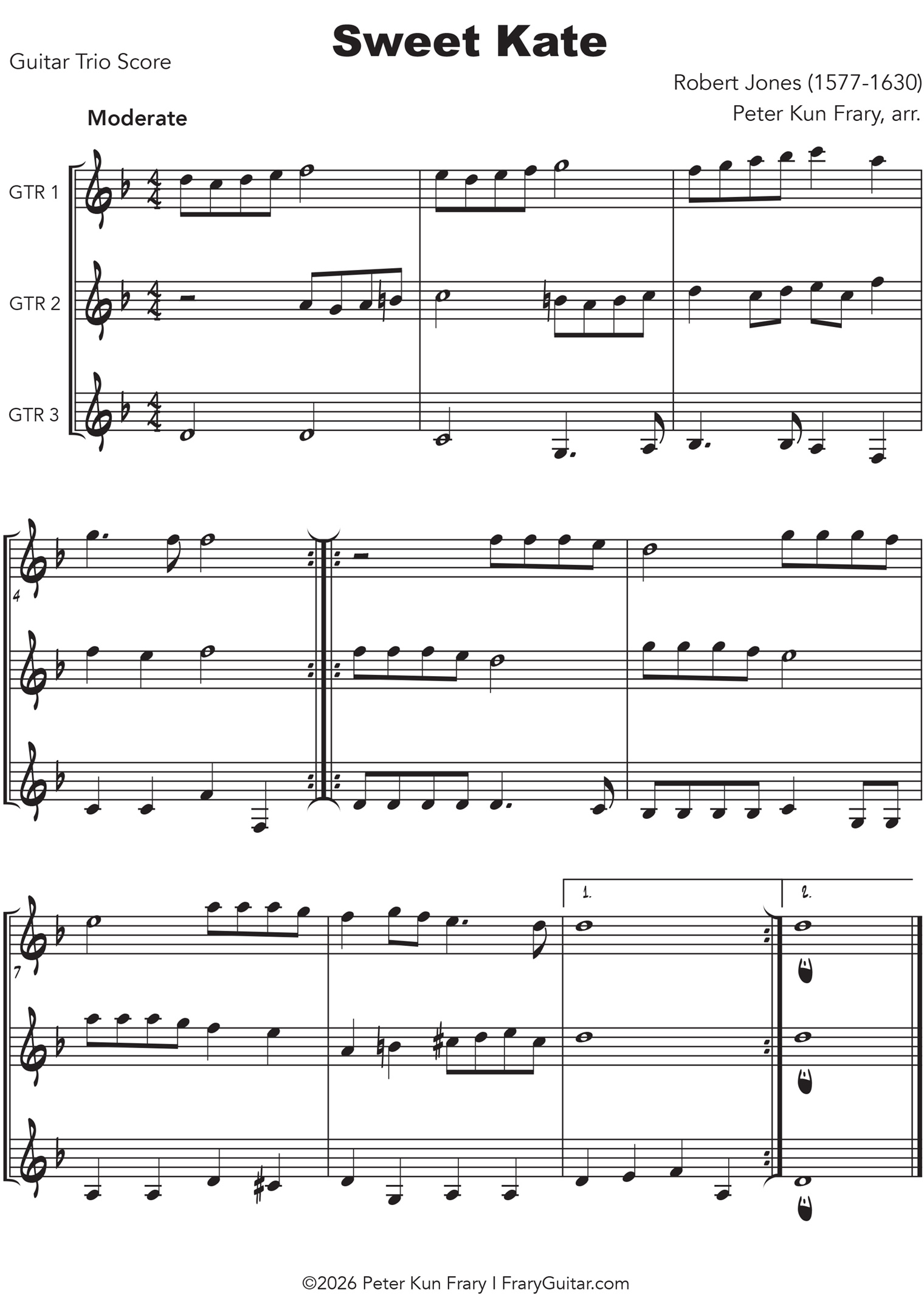
Due to sound sensitive household members, I do much of my editing on Beyerdynamic 270 Pro X headphones, using monitors for fine tuning of EQ, track balance, panning, etc. My signficant other went shopping and I had the day to mix “Sweet Kate” entirely on the KRK Rokit 5.
Sweet Kate | Neumann TLM 102, Tascam Series 208i and Logic Pro X | Hirade H8SS classical guitar in a multi-track recording (bridge mic'd).
I recorded this piece with a Tascam Series 208 interface, Logic Pro X DAW on a Mac Studio M4 Ultra, and a Neumann TLM 102 mic. Why these little pieces? I'm a music professor, teaching beginning guitar and ukulele to college students. I embed scores, audio tracks, and tutorial videos in their web-based textbooks.
My first go at mixing Yellow Bird was with the Sennheiser HD650 headphones and M-Audio BX5 D2 combo. It didn't go well: exaggerated bass and soundstage, and too bright. The HD650 are dark, spacious, and bass-heavy cans, and whereas the BX5 leans to the bright and thin side, making it tough to judge EQ and imaging between these two extremes.
I remixed using a combo of the Beyerdynamic 270 Pro X headphones and Rokit 5 Generation 5 studio monitors, and it came out much better. Of course, mixing results are subjective, but I can definitely say that the KRK Rokit 5 monitors helped me ferret out details in panning, balance, and EQ I missed on the BX5 D2 and Sennheiser HD650 headphones combo.
My final Rokit 5 mix involves a mixed ensemble with ukulele solo. This mix went quickly in comparison to the other mixes since I was now very familiar with the response of the Rokit 5.
Sarabande | Kala Elite Doghair and Romero Creations T6 tenors recorded with Neumann TLM 102, Rode Streamer X and Logic Pro X.
Final Musings
Who are the KRK Rokit 5 Generation 5 monitors for? Any musician in need of good-sounding, compact, and modestly priced studio monitors. With onboard DSP, the Rokit can be almost anything you want it to be. There are better monitors: the similarly sized DSP-adorned Neumann KH 120 II tickled my pickle but cost a wallet-flattening $2000 a pair. For under $400 USD a pair, it is tough to beat the sound quality and sonic versatility of the Rokit 5 Generation 5.
A gotcha for me is the lean connectivity options—only a XLR/TRS combo jack. It would be nice to connect another interface to the Rokit without swapping cables or using a mixing board. If more connections, or consumer-style connections, are essential for you, consider the KRK Classic Series or Kreate Series. They have RCA, TRS, and XLR but lack the fancy-pants DSP feature.
The Rokit's clear, balanced, and neutral sound, vivid sound stage, and compact size are the big deal for my bedroom studio. Plus, the Rokit 5 makes a fine editing combo with my Beyerdynamic headphones.
 •••••••
 •••••••
 •••••••
 •••••••
 •••••••
 Why KRK?
 Defining Features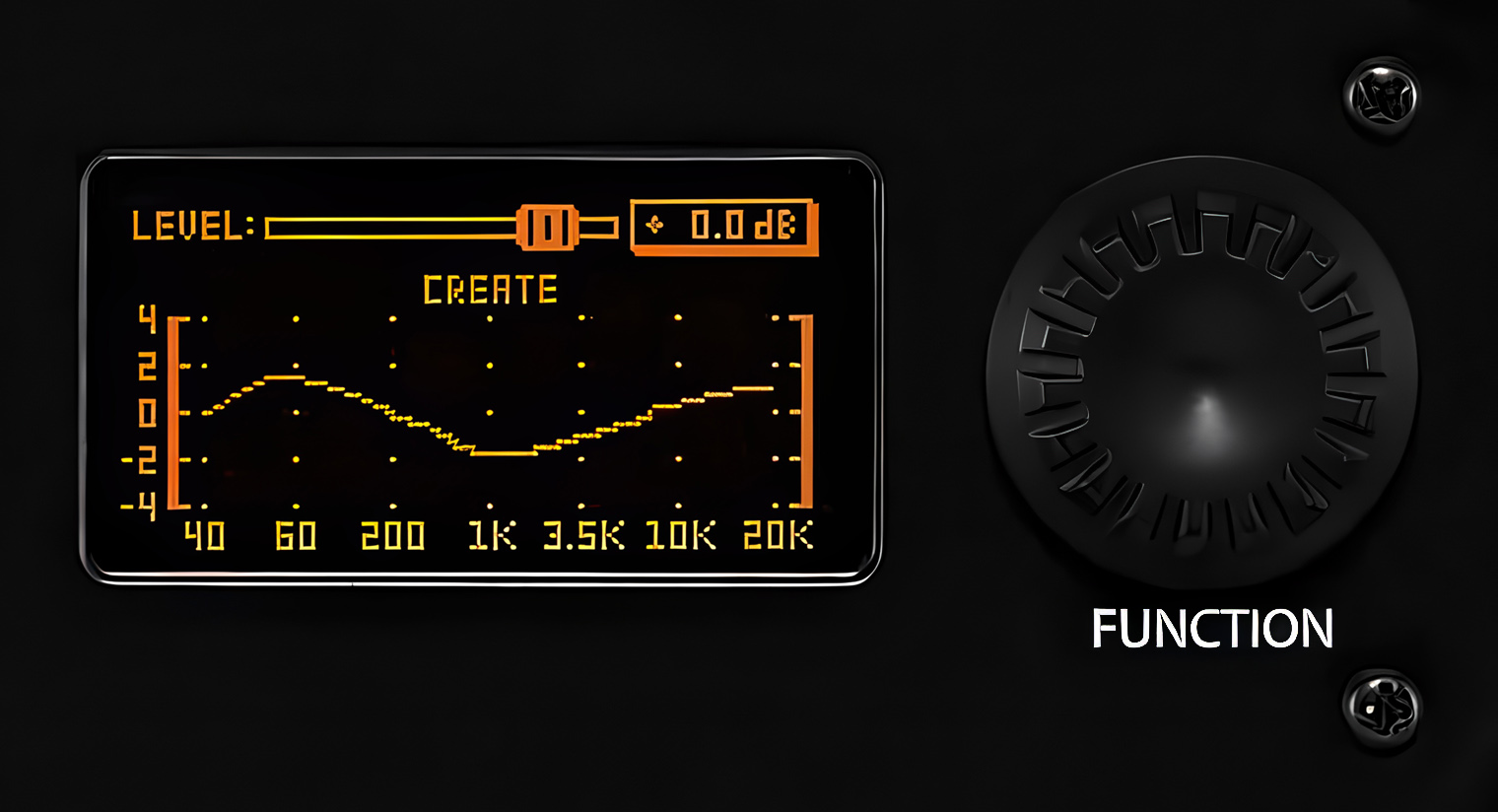
 Voicing Presets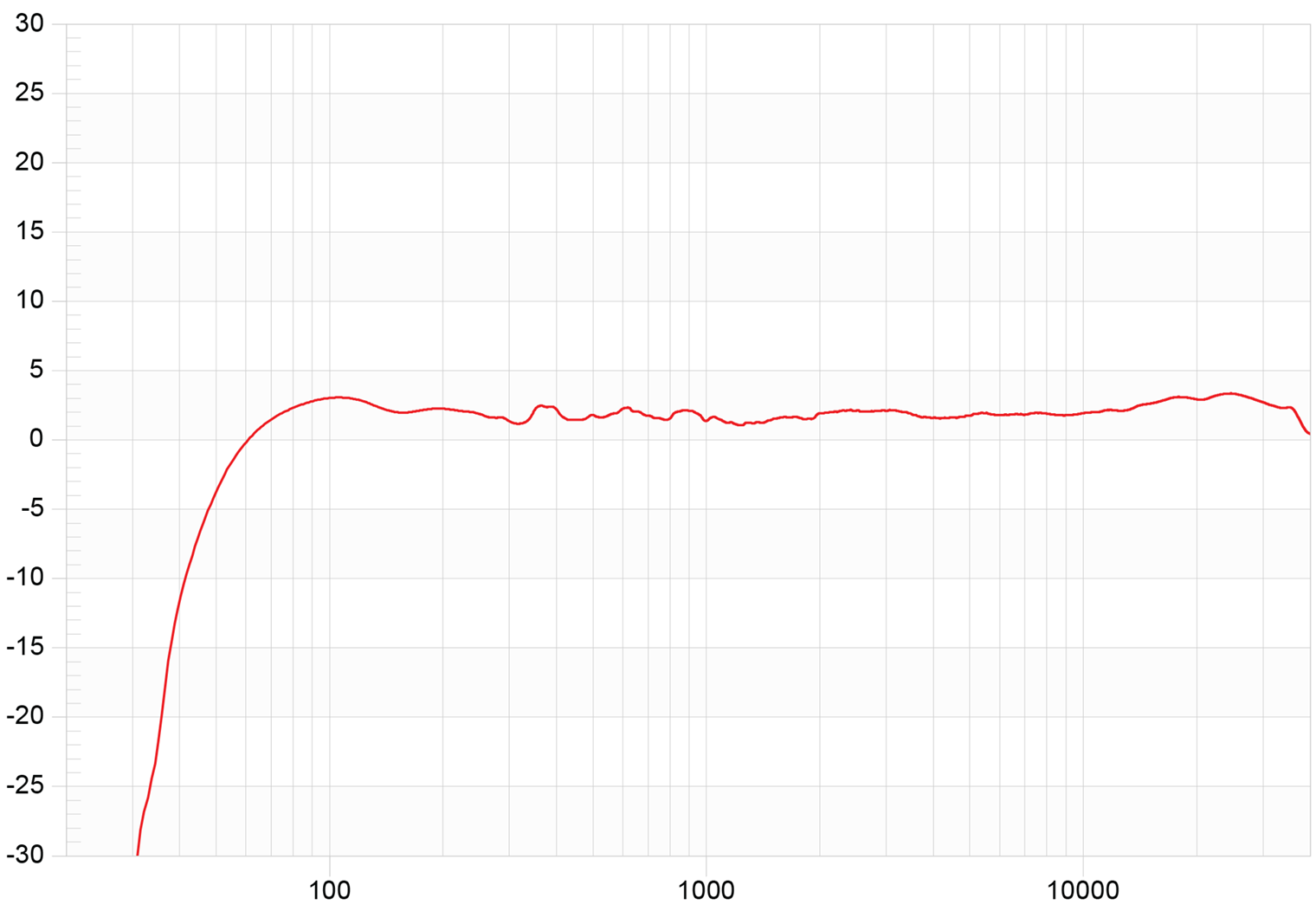
 DSP Access
 No USB
 KRK Audio Tools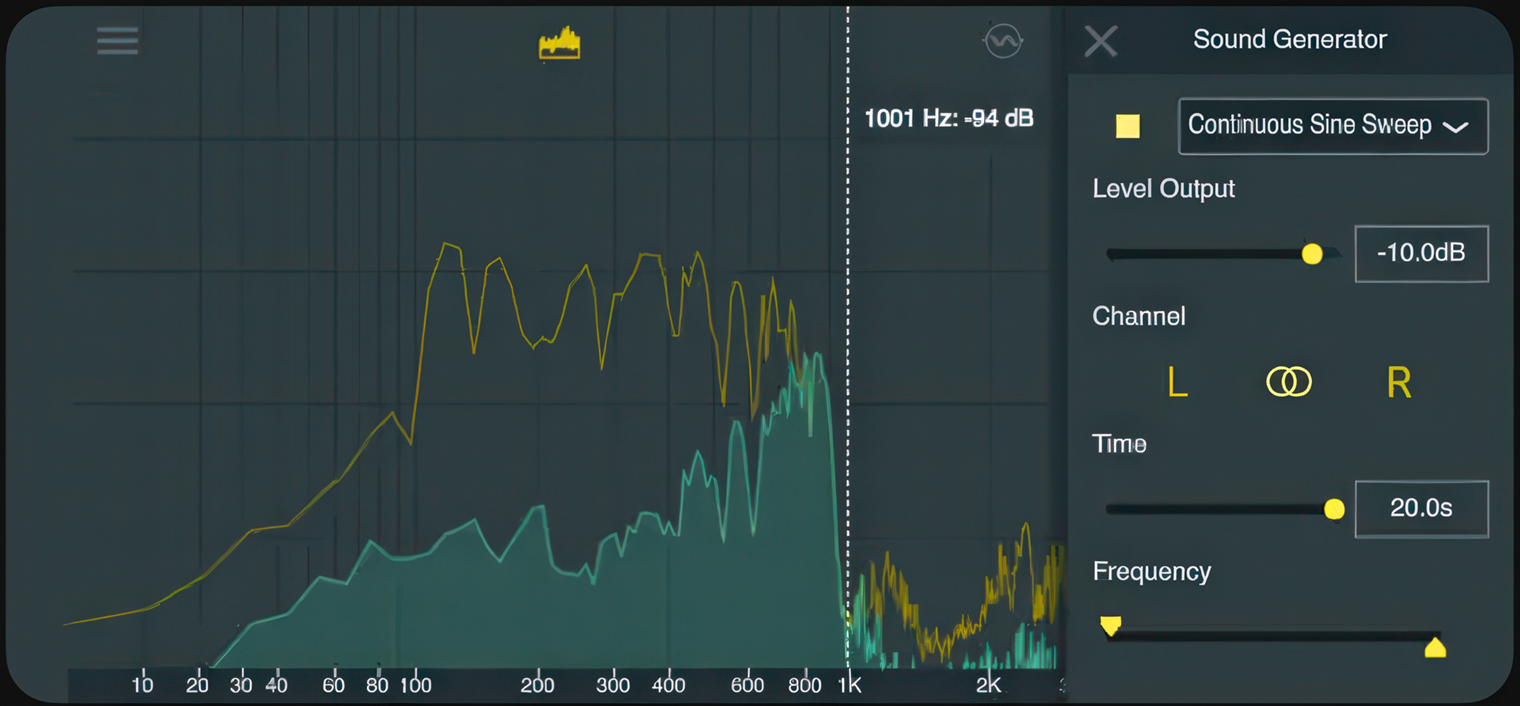
 Sound Characteristics


 Construction
 Blinded by the Logo
 Two-Faced Monitors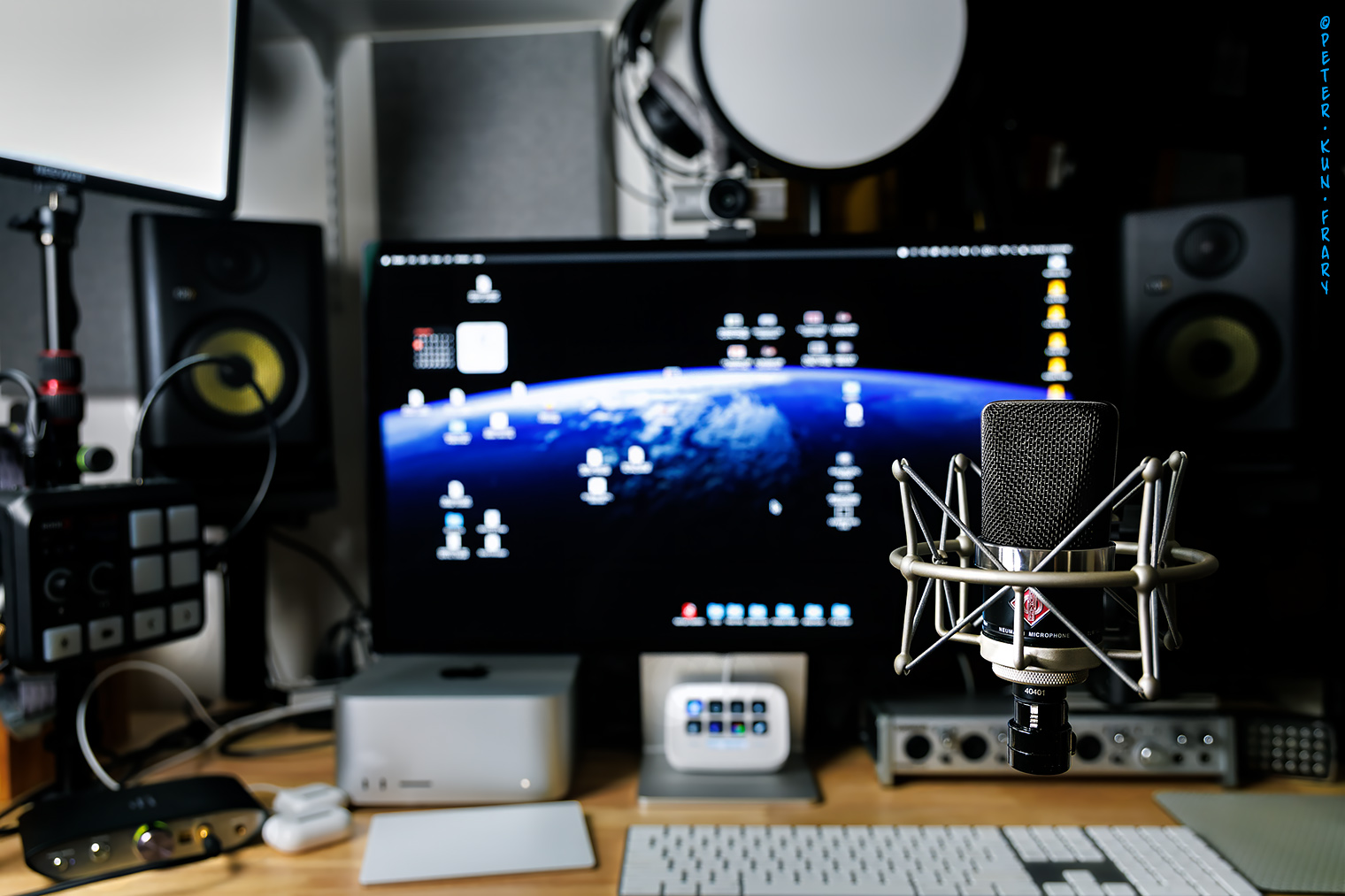
 Amplifiers

 Heat
Heat Connectivity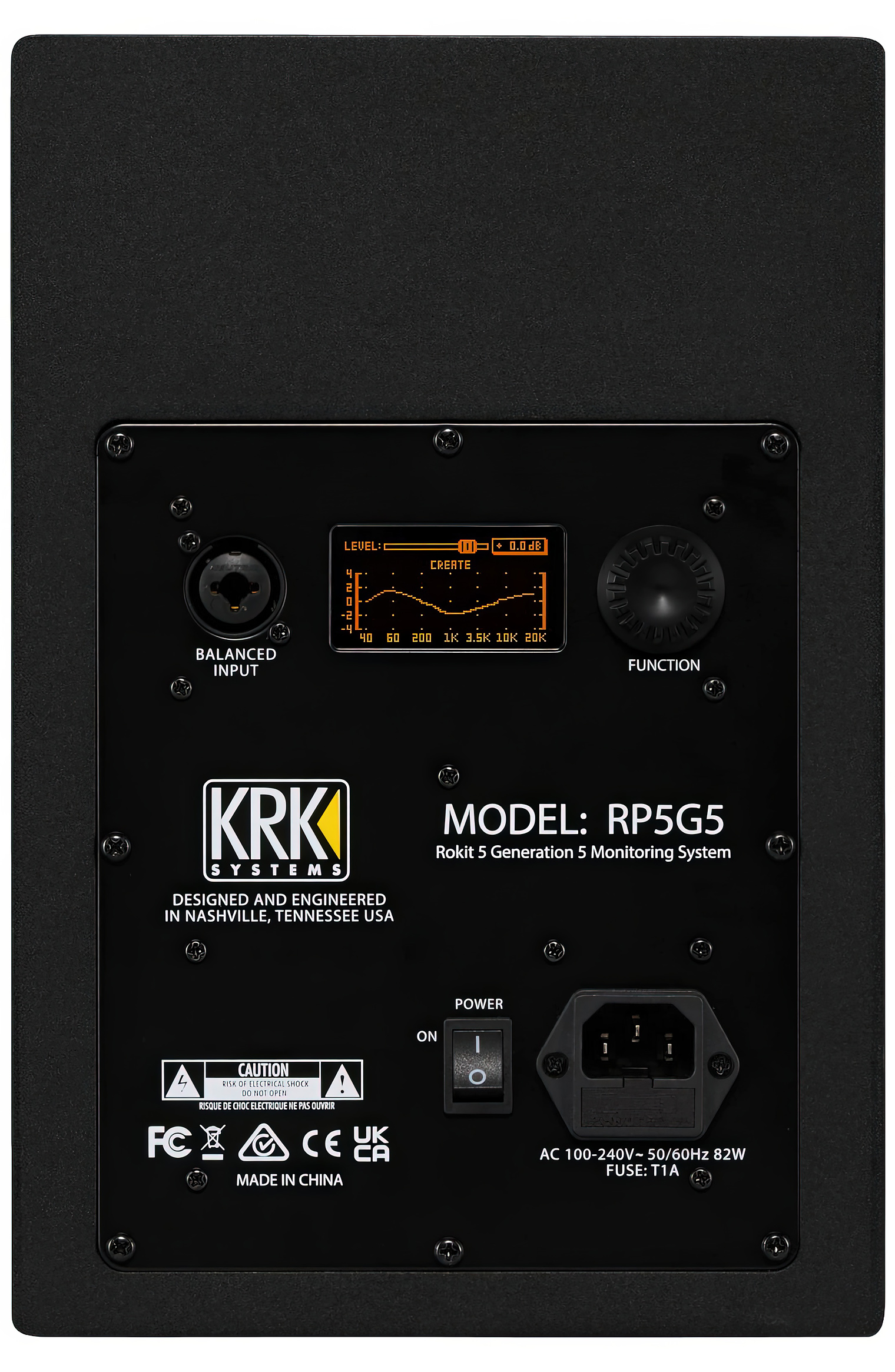

 My First Mixes



 Included Accessories
 Country of Manufacture
 Website